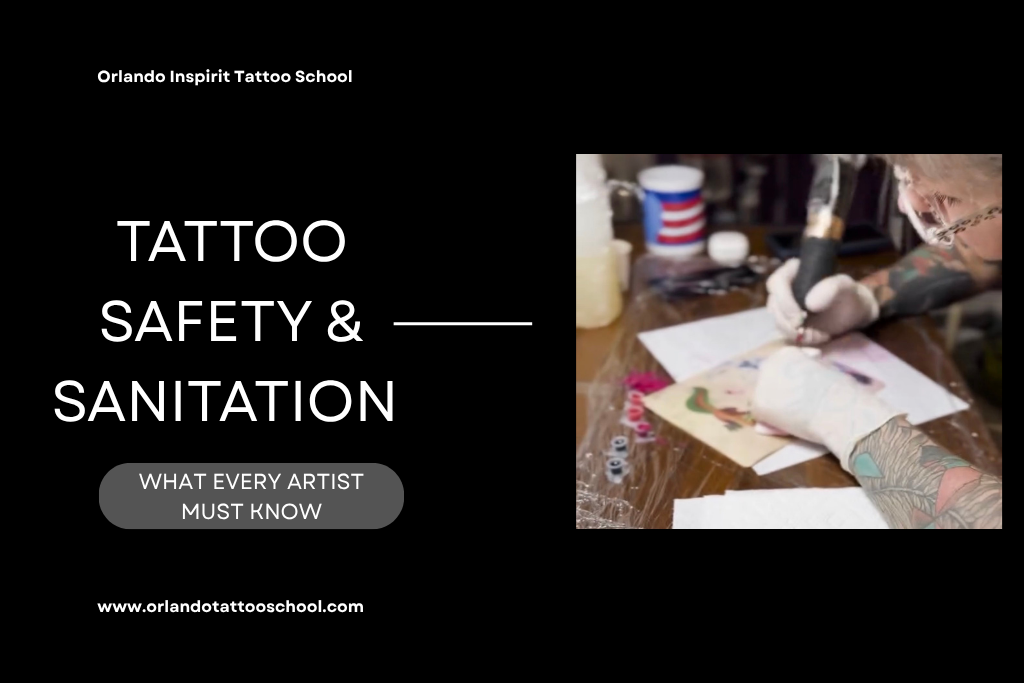


Tattooing is more than creating beautiful artwork—it’s a profession that requires responsibility, professionalism, and a commitment to safety. Every tattoo artist has a duty to protect their clients and themselves by following strict sanitation and infection-control practices.
Whether you’re just beginning your tattoo journey or looking to refine your professional standards, understanding tattoo safety and sanitation is essential for long-term success in the industry.
At Orlando Inspirit Tattoo School, students learn that maintaining a clean, safe environment is just as important as mastering tattoo techniques. Here’s what every aspiring tattoo artist should know about tattoo safety and sanitation.
Tattooing involves breaking the skin’s protective barrier. Anytime the skin is punctured, there is a risk of infection if proper procedures are not followed.
Maintaining high sanitation standards helps:
Clients are more likely to return and refer others when they feel confident that their health and safety are a top priority.
Cross-contamination occurs when bacteria, viruses, or other contaminants are transferred from one surface, person, or object to another.
In a tattoo environment, common sources of contamination include:
Artists must constantly be aware of what they touch during procedures and take steps to prevent contaminants from spreading throughout the workspace.
Hand washing is one of the most effective ways to reduce the risk of infection.
Artists should wash their hands:
Clean hands serve as the first line of defense against contamination.
Professional tattoo artists use personal protective equipment to maintain a sanitary environment.
Common PPE includes:
Gloves should be changed immediately if they become contaminated or when transitioning between tasks.
Many tattoo supplies are designed for single use and should never be reused.
These include:
Using sterile, disposable equipment significantly reduces the risk of transmitting infections between clients.
Artists should always inspect sterile packaging before use to ensure it remains sealed and undamaged.
A clean workstation is essential for maintaining a safe tattoo environment.
Before each appointment, artists should:
Creating an organized setup helps reduce accidental contamination during the tattoo process.
Cleaning and disinfecting are not the same thing.
Cleaning removes dirt, debris, and visible contaminants from surfaces.
Disinfecting uses approved products to kill bacteria, viruses, and other microorganisms.
Tattoo artists should thoroughly clean and disinfect all work surfaces between every client and at the end of each workday.
Because tattoo artists work around bodily fluids, understanding bloodborne pathogens is a critical part of professional training.
Bloodborne pathogens may include:
Artists must know how to properly handle exposure incidents, dispose of contaminated materials, and follow safety protocols that minimize risk.
Many states require bloodborne pathogen training as part of the licensing process.
Ink contamination can occur if proper procedures are not followed.
Professional artists should:
Maintaining clean ink-handling procedures protects both the client and the artist.
Used needles and other sharp instruments must be disposed of in approved sharps containers.
Proper waste management includes:
Safe disposal practices are a fundamental responsibility of every tattoo professional.
Safety doesn’t end when the tattoo session is over.
Artists should provide clients with detailed aftercare instructions to support proper healing and reduce the risk of infection.
Aftercare guidance often includes:
Educated clients are more likely to experience successful healing and better tattoo results.
In today’s tattoo industry, clients expect more than artistic talent—they expect professionalism and cleanliness.
Artists who consistently follow sanitation protocols build stronger reputations, earn client trust, and demonstrate a commitment to industry excellence.
Strong safety habits become part of a studio’s brand and can help attract loyal, long-term clients.
Every successful tattoo artist starts with a strong foundation. At Orlando Inspirit Tattoo School, students receive hands-on training that emphasizes not only artistic development but also the critical safety and sanitation practices required in today’s tattoo industry.
By learning proper infection-control procedures, workstation setup, sterilization methods, and professional standards, aspiring artists can confidently prepare for a rewarding career in tattooing.
If you’re passionate about tattoo art and want to learn the skills necessary to succeed in a professional environment, Orlando Inspirit Tattoo School can help you take the first step.
Contact Orlando Inspirit Tattoo School today to learn more about our tattoo training programs and discover how a quality education can prepare you for a successful future in the tattoo industry.