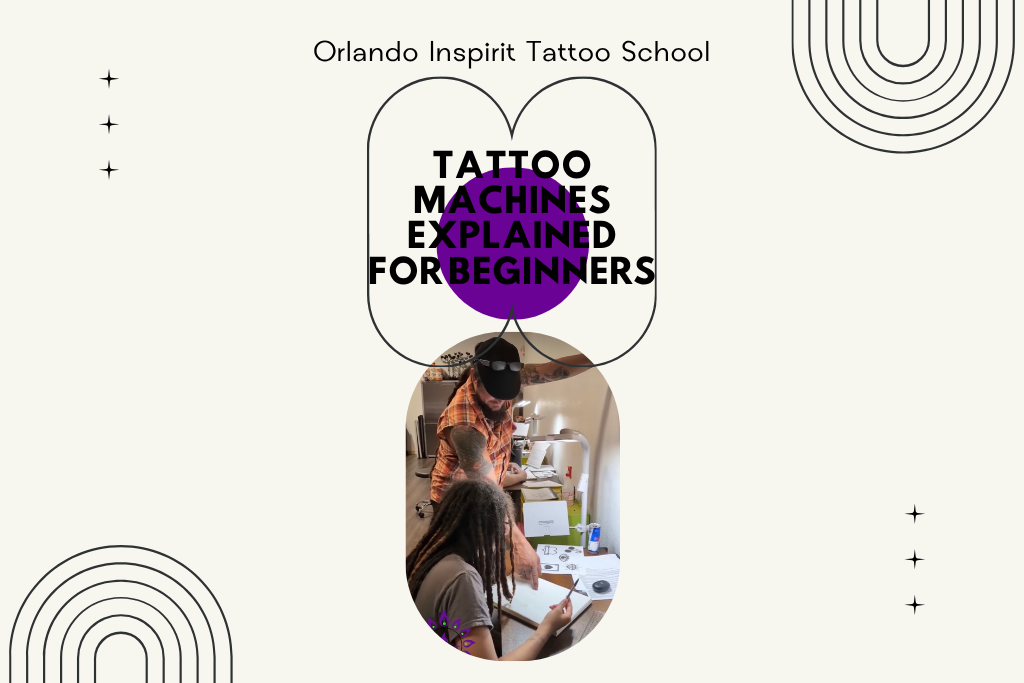


If you’re considering a career in tattooing, one of the first tools you’ll need to understand is the tattoo machine. While many aspiring artists focus on drawing skills and tattoo styles, learning how tattoo machines work is a critical step toward becoming a professional tattoo artist.
For beginners, the variety of tattoo machines available can seem overwhelming. Coil machines, rotary machines, and wireless systems all have unique features and applications. Understanding the differences can help you build a strong foundation as you begin your tattooing journey.
At Orlando Inspirit Tattoo School, students learn the fundamentals of tattoo equipment, safety, and technique to prepare for success in the tattoo industry. Here’s a beginner-friendly guide to tattoo machines and how they work.
A tattoo machine is a handheld device that moves a needle up and down rapidly to deposit ink into the skin. While many people refer to it as a “tattoo gun,” professional artists typically use the term “tattoo machine.”
Modern tattoo machines are designed to provide precision, consistency, and control, allowing artists to create everything from fine-line tattoos to large-scale realism pieces.
Coil tattoo machines have been a staple in the tattoo industry for decades. They use electromagnetic coils to move the needle bar up and down.
Benefits of coil machines include:
Because of their weight and tuning requirements, coil machines often have a steeper learning curve for beginners.
Rotary tattoo machines use a motor instead of electromagnetic coils. They are known for their smooth and consistent operation.
Benefits of rotary machines include:
Many new tattoo artists start with rotary machines because they require less adjustment and maintenance than traditional coil machines.
Wireless tattoo machines have become increasingly popular in recent years. These machines operate using rechargeable battery packs rather than power cords.
Advantages include:
Wireless technology allows artists to move more naturally while maintaining professional-quality performance.
Historically, artists often used separate machines for lining and shading. Today, many modern rotary and wireless machines can be adjusted to perform both functions.
Lining machines are designed to create clean, crisp outlines. They typically move needles with more speed and precision to create bold, defined lines.
Shading machines are configured to create smooth gradients and softer transitions. These setups help artists achieve realistic textures, depth, and dimension.
Understanding the difference between lining and shading is essential as you develop your tattooing skills.
Every tattoo machine contains several key components:
Tattoo needles come in various configurations designed for specific purposes, including lining, shading, and color packing.
The grip is the portion of the machine that the artist holds during the tattoo process. Proper grip technique helps improve control and reduce fatigue.
Most tattoo machines require a power source to operate. Traditional setups use external power supplies, while wireless machines use rechargeable batteries.
Many modern tattoo machines use cartridge needles, which make needle changes faster, safer, and more convenient.
There is no single “best” tattoo machine for every artist. However, many beginners find rotary and wireless machines easier to learn with because they are lightweight, user-friendly, and require less maintenance.
The right machine often depends on:
One of the biggest advantages of attending a tattoo school is the opportunity to learn about multiple machine types before investing in your own equipment.
A tattoo machine is only as effective as the artist using it. Professional tattooing requires more than simply operating equipment. Artists must understand:
Learning these skills through structured education can help aspiring artists build confidence and develop professional habits from the beginning.
At Orlando Inspirit Tattoo School, students receive hands-on training designed to prepare them for real-world success in the tattoo industry. From tattoo machine fundamentals to advanced artistic techniques, our programs provide the knowledge and practical experience needed to begin a professional tattoo career.
Whether you’re interested in fine-line work, realism, traditional tattoos, or custom designs, understanding tattoo machines is one of the first steps toward becoming a skilled tattoo artist.
Tattoo machines are the foundation of every tattoo artist’s toolkit. By understanding the differences between coil, rotary, and wireless machines, beginners can make informed decisions and develop stronger technical skills.
If you’re ready to turn your passion for art into a career, Orlando Inspirit Tattoo School can help you build the knowledge, confidence, and hands-on experience needed to succeed in the growing tattoo industry.